Welcome to PICTO Online,
To help us support you better, tell us who you are.
All prices below include paper / media, mounting, hanging.
Example configuration for 30 × 40 cm : €87.91Paper / Media : Transparent Acrylic « Diasec » like 3 mm - Mounting : Dibond 2 mm - Hanging : Inside subframe 30 x 20 mm
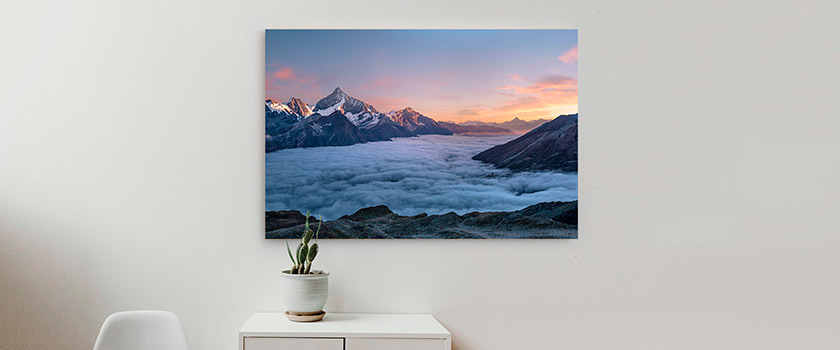
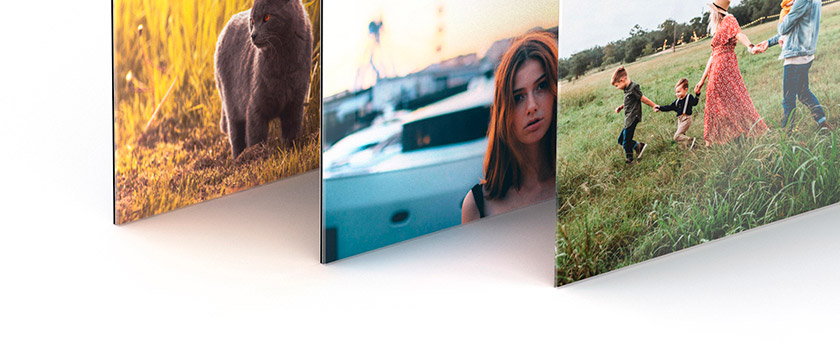
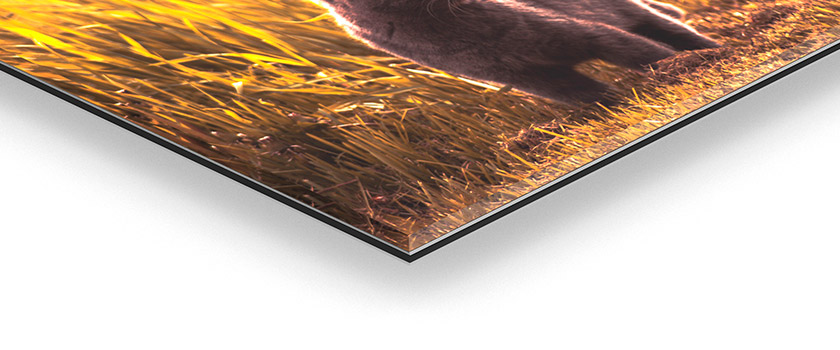
Give your images striking depth and vibrant brightness with our UV printing technique under Plexiglas. This innovative process involves printing directly onto a sheet of high-quality, transparent Plexiglas acrylic glass, for an exceptional visual finish. The inks are then cured and permanently bonded to the substrate using UV light, ensuring intense colours and long-lasting durability. The acrylic sheet is finally laminated onto a Dibond panel — available in the thickness of your choice — for a rigid, lightweight finish that is ready for installation. Find out more about our UV printing on Plexiglas service.
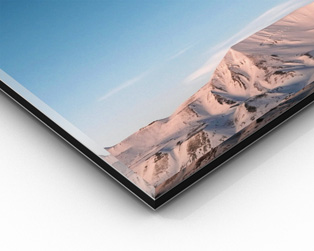
Printing under the acrylic glass plate and addition of white coating under the ink coating so as to provide a white ground.
For use with ambient lighting only.
 Download the ICC profile
Grammage : 3600g| Width : 200 cm| Dmax: 2.4
Combined with UV ink curing, this innovative inkjet printing process enables images of impeccable quality to be printed directly onto high-quality transparent Plexiglas acrylic.
The Plexiglas acrylic sheet is then laminated onto 2 mm or 3 mm thick Dibond, before being fitted with a mounting system of your choice on the reverse.
The transparent Plexiglas® substrate is highly durable; it is a co-extruded sheet material made from acrylic glass (polymethyl methacrylate, also known as PMMA).
It is composed of 90% recycled raw material.
Particularly resistant to light and water, this finish produces images with vibrant colours that are very sharp and extremely realistic.
Your images gain depth and brightness!
On the back, you can choose between a recessed aluminium frame, set 5 cm inwards, or a flush aluminium frame, running along the edge of the aluminium sheet for a ‘picture’ effect.
We also offer hanging rails that give the same effect as the recessed frame, or practical metal adhesive fasteners for small formats.
Our recommendation for rear mounting: when laminating Plexiglas acrylic glass onto Dibond, rear mounting using a recessed or flush-mounted aluminium frame or top/bottom mounting barsbottom mounting bars helps to reinforce the components against each other and prevent any warping of the material over time. This is particularly important for large formats or panoramic formats (2:1 ratio).
Alternatively, you can choose not to use any rigid mounting on the back by disregarding our recommendation.
Rigid printing is a highly innovative, high-quality printing process that applies ink directly to a rigid substrate.
This state-of-the-art process allows printing directly onto a wide variety of rigid substrates such as Dibond, Plexiglas, Carton Plume or PVC.
The inks are cured and bonded to the substrate using UV light, offering excellent durability when displayed both indoors and outdoors.
Please do not confuse a photographic print mounted onto a rigid substrate (aluminium, Dibond, PVC or Carton Plume) with a rigid print produced directly onto a substrate (Dibond, brushed aluminium Dibond, Plexiglas , acrylic glass, PVC or foam board).
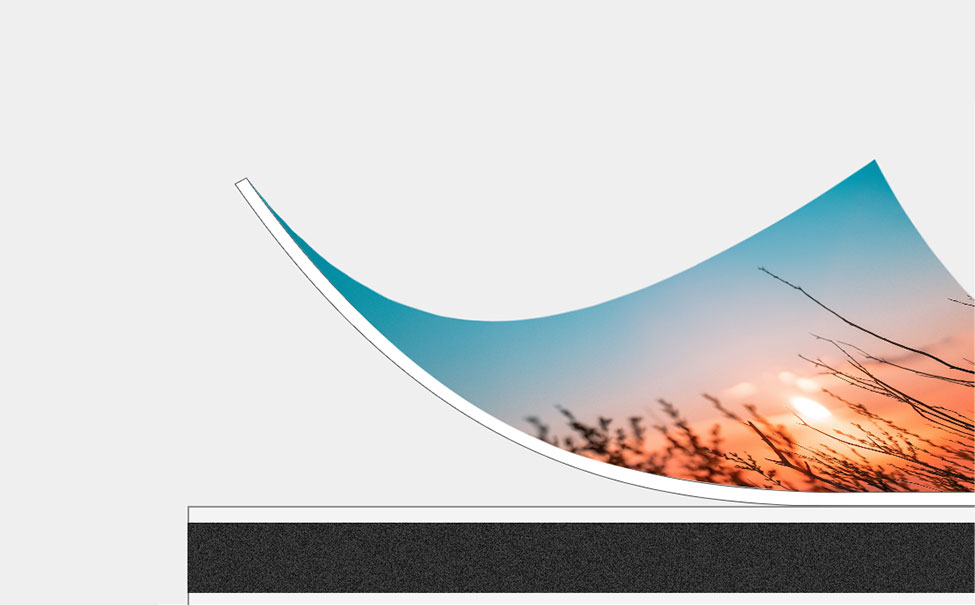
Photographic print mounted onto a rigid backing
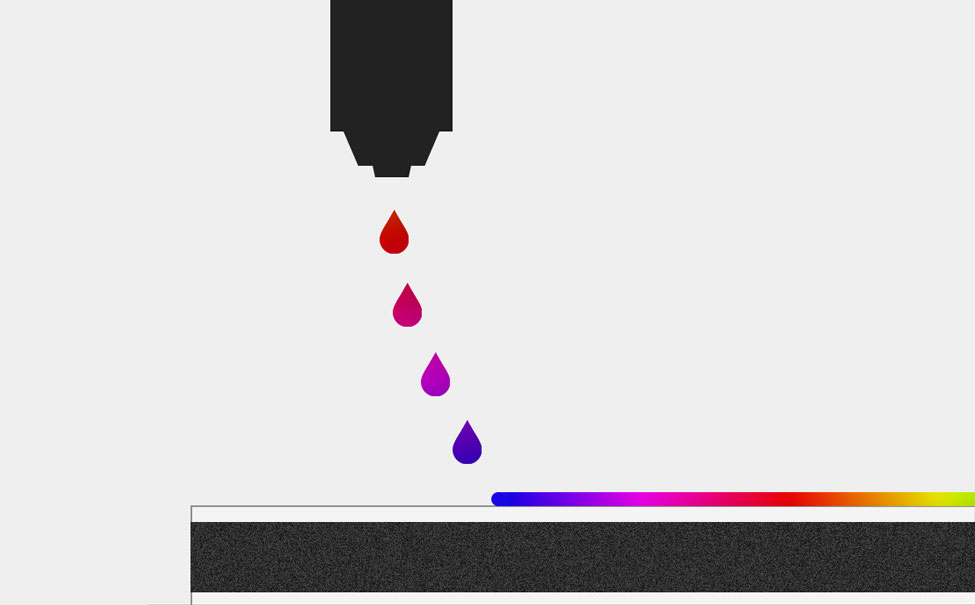
Rigid print directly onto the substrate
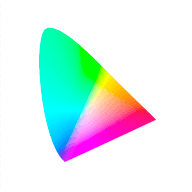 Large
Gamut
Gamut is defined by the amplitude of the color space that a process can reproduce.
Large
Gamut
Gamut is defined by the amplitude of the color space that a process can reproduce.
 300 DPI
Resolution
Resolution is expressed in DPI (Dot Per Inch), which is the number of pixels defined every 2.54cm.
300 DPI
Resolution
Resolution is expressed in DPI (Dot Per Inch), which is the number of pixels defined every 2.54cm.
 Free size
This pictogram means that with this service, your prints and finishes are custom-made, in the format that you have freely defined.
Free size
This pictogram means that with this service, your prints and finishes are custom-made, in the format that you have freely defined.
 205 cm
Max width
The width corresponds to the width of the paper roll used. This value can therefore correspond to the smallest side of your print or photo print.
205 cm
Max width
The width corresponds to the width of the paper roll used. This value can therefore correspond to the smallest side of your print or photo print.
 Permanency
The permanence of a process is its ability to resist the gradual fading of dyes or pigments on a given support, under specific exposure conditions: quality and quantity of light and humidity.
Permanency
The permanence of a process is its ability to resist the gradual fading of dyes or pigments on a given support, under specific exposure conditions: quality and quantity of light and humidity.