 Framing: everything you need to know about protecting your prints
Framing: everything you need to know about protecting your prints
■ With or without glass?
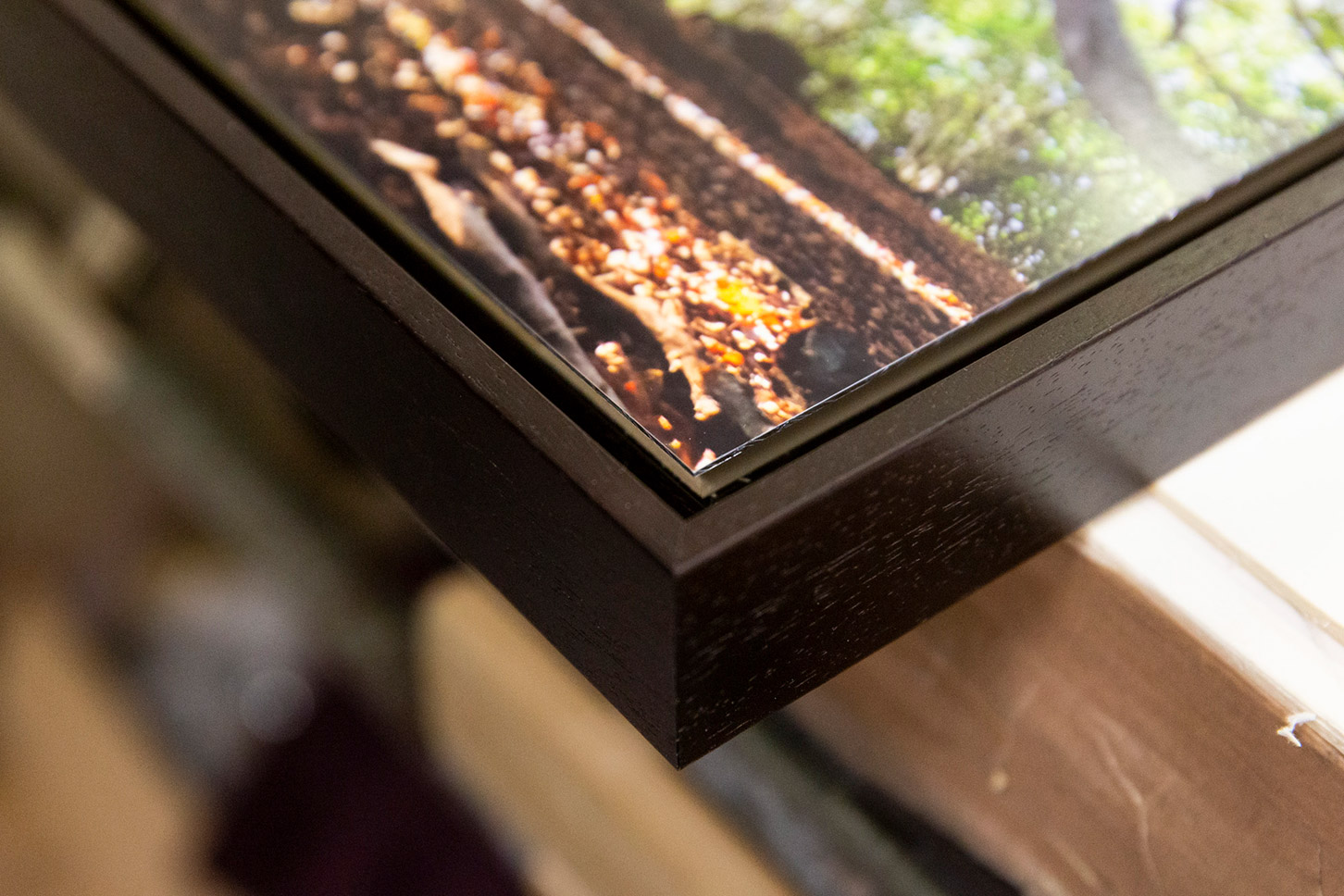
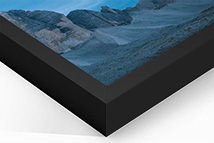
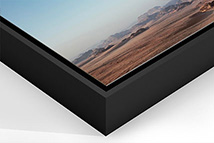
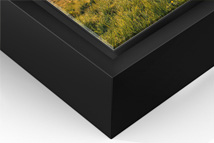
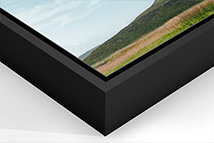
Detail of a shadow box frame without protective glass.
This is the first question to ask yourself when you want to frame a print. It is particularly important if you are considering not using protective glass, as not all frames offer this option. For aesthetic or artistic reasons, you may prefer a frame without glass, to allow for better visual contact with the paper, particularly if it is textured. However, ensure that the print is not displayed in a high-traffic area, as this could damage it. To remove any dust that may settle on it, the safest method is to use a dust blower or a brush with very soft bristles, taking care not to apply any pressure to the surface of the print.
The photo frames available on Picto Online with the option of no protective glass:
→ The shadow box frame in custom sizes (€€) or standard sizes (€)
■ Which type of glass to choose:
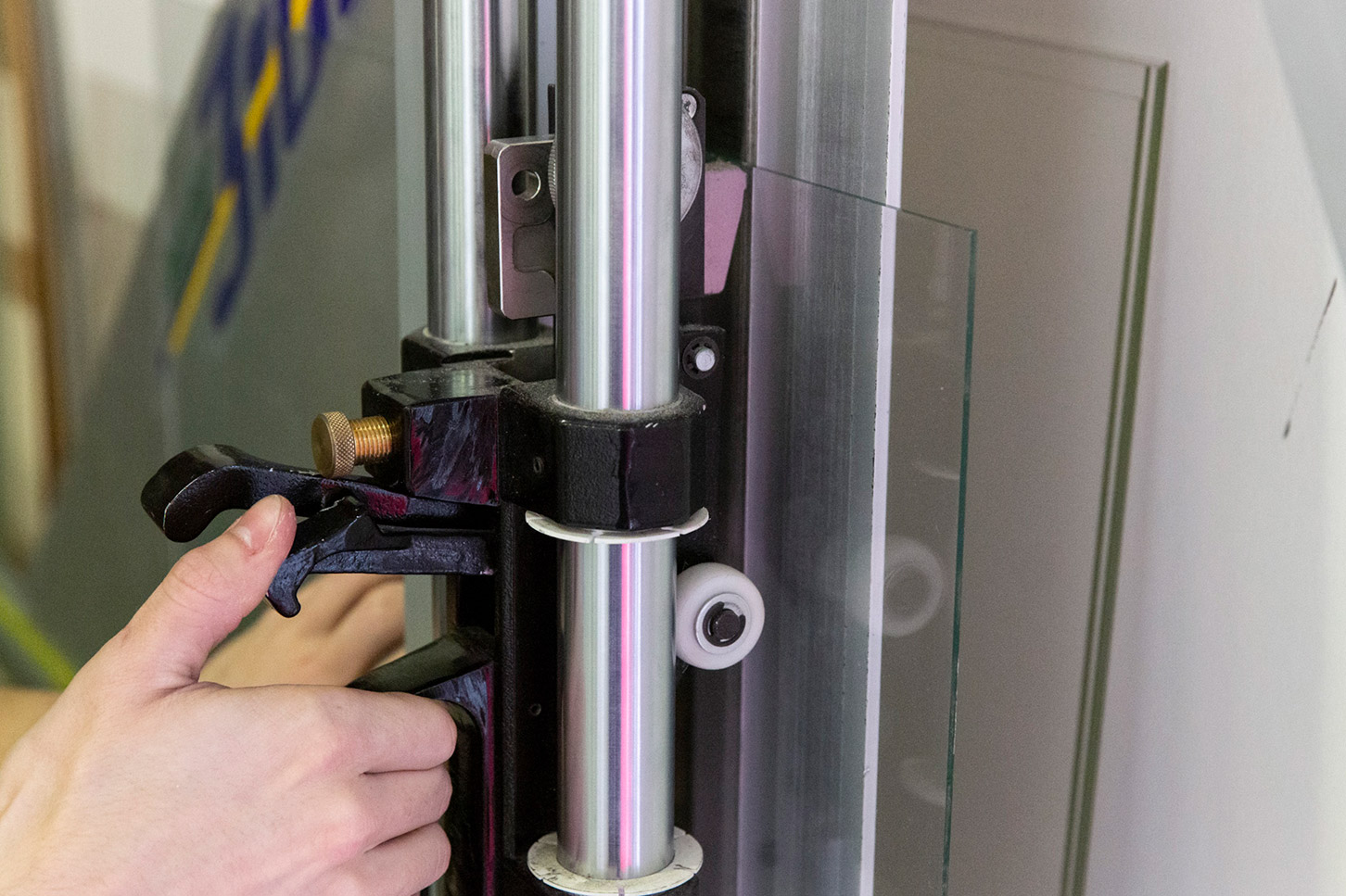
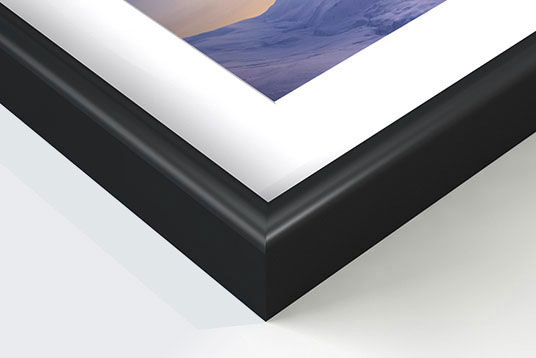
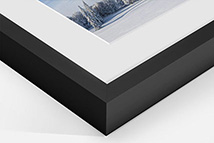
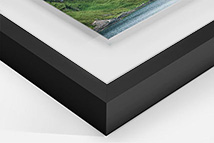
Custom-cut protective glass for bespoke framing.
Would you like to provide better protection for your print? For all our frames, we offer 2 mm thick mineral glass with polished edges. This is a high-quality, extra-clear glass that naturally filters out some UV rays. Its low iron oxide content ensures high light transmission and minimal colour cast. This is the most economical option, whilst still providing good protection for your print.
If your environment is particularly bright, opt for 2 mm anti-reflective glass. Thanks to a special coating, it reduces reflections and naturally filters out over 60% of UV rays, ensuring a clear surface free from visual distractions. There is also a version featuring enhanced UV protection to provide long-lasting protection for your print against the harmful effects of UV rays. A very high-end option, this is primarily intended for galleries, museums and collectors keen to ensure the optimal preservation of their artworks.
Finally, you can opt for 4 mm acrylic glass, also known as Plexiglas. This is a rigid, glossy sheet that is particularly impact-resistant and naturally filters out over 70 per cent of UV rays. Its lightness and strength make it the ideal choice for large-format frames.
Which frames should you choose for your protective glass?
→ The art frame (€€€)
→ The Box (€€€)
→ The floating frame (€€€€)
Photos: © Flaminia Reposi